
Build foundational capability in international trade management for global operations
Strengthen your understanding of international trade, import and export requirements, and the logistics that connect global markets, so you can support smoother cross-border operations and take on more confident roles in trade-related functions.
The Executive Certificate in International Trade Management equips learners with sound foundational knowledge for international trade practice in an organisation. This short, focused course combines one digital learning module and one applied Skills Project so that working professionals can build both core knowledge and hands-on capability in a compact timeframe.
International trade knowledge and applied practice in one executive certificate

International trade drives growth, and organisations need people who understand it
Businesses increasingly depend on well-managed international trade that connects import and export requirements, trade logistics, and risk management into a smooth flow of goods across borders. This short certificate helps learners build a practical foundation across international trade practice, developing the understanding needed to support better cross-border decisions and contribute confidently in a modern trade environment.
What you will learn
Through this certificate, learners gain focused, job-ready knowledge across international trade, trade logistics, import and export requirements, transfer pricing, and risk mitigation so they can support stronger and more compliant cross-border operations.
A perspective of international trade
Build a clear understanding of international trade, its drivers, and the wider context in which global commerce operates.
The logistics of international trade
Understand how trade logistics connect suppliers and markets, and how the movement of goods supports cross-border trade.
Facilitation of import requirements
Learn how import requirements are facilitated, including the documentation and procedures that support compliant importing.
Export requirements and transfer pricing
Develop knowledge of export requirements and the principles of transfer pricing within international trade.
Risk mitigation and Incoterms
Understand trade risks, how they are mitigated, and how Incoterms define responsibilities in international transactions.
Applied Skills Project
Apply the course content through a short, hands-on Skills Project that consolidates your international trade knowledge in practice.
A two-module certificate built for both knowledge and application
This executive certificate course comprises one digital learning module and one applied Skills Project.
Logistics and International Trade (Digital Learning)
A digital learning module that supports self-directed study through online learning and videos, helping learners build foundational understanding of international trade practice in a flexible format.
- A Perspective of International Trade
- The Logistics of International Trade
- Facilitation of Import Requirements
- Export Requirements and Transfer Pricing
- Risks Mitigation and Incoterms
Skills Project
A short, hands-on project module in which learners apply the international trade content to a practical task, consolidating their knowledge and demonstrating job-ready capability in international trade management.
Flexible for working professionals, structured for measurable learning
6 weeks part-time
The certificate can be completed within 6 weeks.
Weekday evening classes
Lecture timings for part-time classes are on weekday evenings from 7.00 pm to 10.00 pm.
Lecturer-led classes
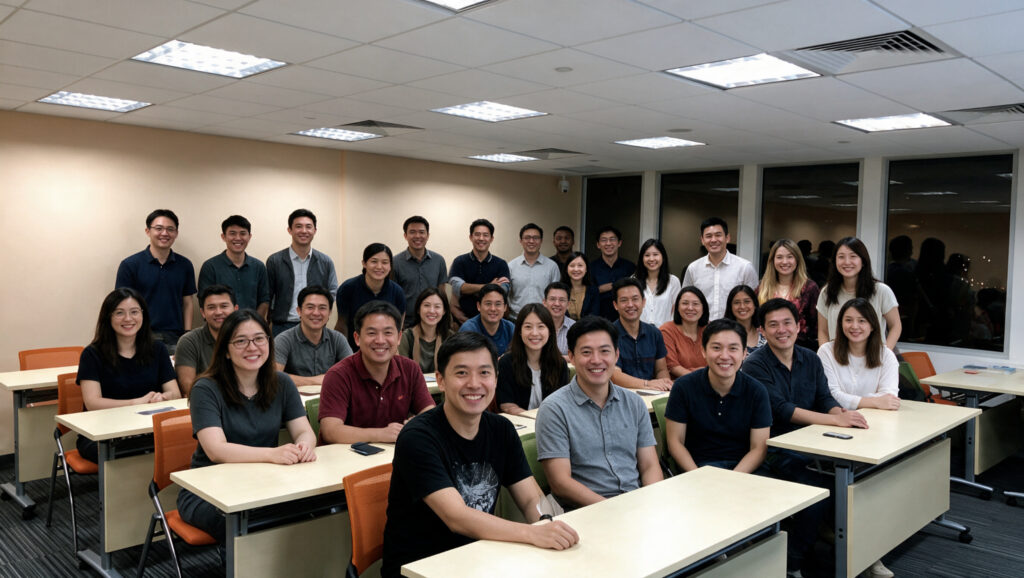
Classes are led by a lecturer and conducted largely online, with in-person sessions at SIPMM's campus in Singapore.
Blended learning mode
Students attend class lectures and also undertake self-directed learning through digital learning and online videos.
Project and online assessment
The Skills Project is assessed through applied project work, and the digital learning module through an online examination.
Regular intakes
This course is scheduled to commence in January, March, June, September and December, subject to change. Venue: Trade Association Hub (TA Hub), Singapore.

Designed for professionals seeking focused international trade knowledge
- Working professionals in trade, shipping, freight, and import and export functions
- Operations and logistics staff who want focused, job-ready knowledge of international trade practice
- Adults seeking a foundation-level executive certificate in the international trade field
- Learners who want a short course to build toward wider roles in international trade and supply chain operations
Entry criteria
- At least 21 years old
- At least 1 year of relevant work experience
- Applicants who do not meet the criteria but have at least 3 years of relevant work experience may be considered on a case-by-case basis, subject to review by the Academic Board
Credentials that recognise both qualification and digital achievement
Learners who successfully complete both modules receive the certificate qualification, with an additional digital competency recognition opportunity for strong performance in the online module examination.
Executive Certificate in International Trade Management (ECITM)
Students must pass both modules to complete the course successfully and to be awarded the Executive Certificate in International Trade Management.
Digital Certificate of Competency
Learners who attain a minimum score of 80% for the Digital Learning module examination will also receive a Certificate of Competency.
A pathway toward SIPMM professional designations
The Digital Certificate of Competency earned in this course can count toward SIPMM’s professional designation pathways, including the Accredited Sustainability Professional (ASP™) and Accredited Artificial Intelligence Professional (AIP™) designations. These designations recognise a professional’s experience, skills, and competence in the field.
A trusted institute for professionals in logistics, procurement, and supply chain
Sought after by employers worldwide, SIPMM graduates often advance to the next level in their careers and benefit from industry networking and career opportunities.
Build a competitive edge through industry-relevant knowledge and digital learning that connects best practice with emerging developments.
Learn under experienced practitioners and subject experts through engaging and practical learning.
Study within a professional development ecosystem built to support long-term growth in the supply chain sector.
Build foundational international trade capability with a focused executive certificate
Build practical knowledge in international trade, import and export requirements, trade logistics, and risk mitigation, and position yourself for the next stage of your professional growth.